We will dig rhizomes (underground stems) from the rivercane and put them in plastic bags with potting soil. These will be delivered to nursery partners who will grow them and up into larger plants for distribution next spring. The project aims to help local nursery businesses begin to offer rivercane plants at an affordable price for local streambank and ecosystem restoration projects.
With the advent of spring, we are surrounded by resurrection stories. Roofs once covered with blue tarps now bear fresh shingles in my neighborhood. Roads have reopened. Where Hurricane Helene toppled trees, new growth is emerging. Rivers, once clogged with debris and trash, are being cleaned by dedicated volunteers. While vitriol spews from Washington, simple acts of kindness — neighbors helping neighbors and strangers — shine even more brightly. How many times has the Good Samaritan story played out in our communities? And all around us, the beauty of spring — redbuds, dogwoods, rhododendrons, mountain laurels, and more — graces our forests with hope and renewal.
While we have much to celebrate, there is still much to be done. Our congregations rose to the challenge when they were most needed and continue to be centers of support, healing, and action. You are keeping the resurrection story alive every day.
With the loss of our director in December, the Creation Care Alliance of WNC has not been able to lead and convene as much as we would have liked. Yet, MountainTrue’s commitment to the Creation Care Alliance remains strong. We are actively hiring our next staff member and making plans to expand our programs, engage more congregations, and create new opportunities to make a difference.
Over the coming months, we will have a lot to share and be excited about together. We will keep you updated and look forward to your continued partnership.
Thank you for all you do to nurture creation and community.
In hope and gratitude,
Bob Wagner
MountainTrue Executive Director
]]>I write to share two pieces of information with you.
1. We are sad to say goodbye to Sarah Ogletree, our Creation Care Alliance Director. Sarah did a great job building up CCA, expanding its mission and geography, and being a wonderful partner to work with. You can read her note to you below. We will hire a replacement for Sarah. Until then, we may be a bit short-staffed. If you need assistance, please feel free to reach out to me (wagner@mountaintrue.org).
2. We hope you will attend our one-day CCA Symposium scheduled for Saturday, May 17, at the Montreat Conference Center in Montreat, NC. Our focus will be on building support and solidarity after Helene and strengthening congregations’ engagement with local communities through organizing. You will receive information about this event very soon.
We appreciate you and look forward to connecting soon.
Bob Wagner
MountainTrue Executive Director
Dear Friends,
After much reflection, I have made the difficult decision to step away from my role at MountainTrue. This has been a place of tremendous growth for me, and I am deeply grateful for the relationships and experiences I’ve had here.
Over the past year, I’ve come to realize that my path is leading me in a new direction. My passion for climate justice—focused on people-centered, intersectional efforts—has always been at the core of my work. In light of our changing political landscape, I feel called to engage more directly in these areas.
While I will miss this meaningful role and community, I remain profoundly supportive of MountainTrue’s mission. I look forward to seeing how MountainTrue continues to work alongside regional faith communities and leaders to shape local change.
Thank you to everyone who has supported me along the way. It has been an honor to be part of such a mission-driven community, and I will always cherish the shared accomplishments from my time here. Though I am leaving this position, know that I remain your neighbor and a fellow lover of these places we share. I am grateful for that connection and look forward to continuing our collaboration wherever possible.
With gratitude,
Sarah
In the aftermath of Hurricane Helene, we swiftly mobilized to provide essential support to communities affected by the storm. Our dedication to environmental stewardship is intertwined with our commitment to caring for our neighbors in times of need. Here’s an overview of our accomplishments so far and how we can continue this vital work together.
Immediate Relief Efforts
Within just three days of the hurricane, we raised $5,000 through PayPal donations. Of that amount, nearly $3,000 was directly distributed to families who were struggling via personal crowdfunding campaigns. The remaining funds supported rural supply distribution centers, ensuring their most urgent needs were met by purchasing high-cost items like propane and generators.
This kind of direct aid can truly transform lives. We witnessed this when a woman from Spruce Pine faced an emergency airlift due to stress-induced early labor at 35 weeks pregnant. Separated from her support system and lacking essentials like diapers and clothing, we stepped in to help. We connected her with emergency funds and a nearby faith community, who, with support from The Highlander Center, assisted her in navigating FEMA applications, securing temporary housing, and gathering necessary items for her and her baby. We’re grateful we were able to support this family during such a vulnerable time, and we’re thrilled to share that both mom and baby are doing well!
Collaborative Partnerships
Our role as a connector has been crucial. We’ve brought together faith groups, relief organizations, and mutual aid hubs including the newly formed Helene Rebuild Collaborative to ensure that surplus goods are effectively redistributed. For example, we facilitated the transfer of $4,000 worth of generators to the Helene Rebuild Collaborative to ensure they are used where they’re most needed.
We’ve collaborated with mutual aid hubs, including folks working with the The Pigeon Community Multicultural Development Center in Haywood County, to manage surplus donations efficiently. This included sourcing diapers from distribution centers in Mitchell County to areas in Haywood County that lacked adequate supplies.
We’ve coordinated with congregations from unimpacted areas to ensure that funds are allocated where they’re most needed. For example, Portico (a church in Charlottesville, VA) raised $10,000 to purchase essential items for affected communities. By working with Mitchell County Emergency Services, we were able to identify high-need items, including generators to power wells in areas expected to be without electricity for months. These items were delivered last week–right in time for the first cold snap.
We’ve also partnered with local churches such as First Baptist Church of Sylva and St. John’s Episcopal Sylva, creating a network to organize and distribute necessary items, including winter coats, propane heaters, and solar-powered lights to congregations in areas with significant need. An anonymous donation of $2,000 in gift cards for emergency relief further exemplifies the generosity within our community. These funds have been disseminated to trusted community leaders and are now helping those with boots-on-the-ground respond to the urgent needs before them in a timely, effective, and loving way.
How You Can Help
While we’ve made significant strides, there is still much to be done. Your continued financial support is essential for us to expand our relief efforts and help even more families recover from the aftermath of Hurricane Helene. With additional funds, we can:
- Provide more emergency assistance to families in crisis.
- Purchase essential supplies and equipment for communities facing prolonged power outages.
- Support local congregations in their ongoing relief efforts and outreach.
- Hire additional staff to manage our grassroots disaster relief and mutual aid efforts, ensuring they are sustainable for the long term.
Together, we can strengthen our response and ensure that our communities recover and rebuild. If you’re inspired to help, please donate to the MountainTrue Hurricane Recovery Fund with “CCA Helene Relief” in the memo. Your generosity will directly impact those in need and foster resilience in our communities.
Thank you for standing with us as we care for creation and each other in these challenging times. Let’s continue to make a difference together!
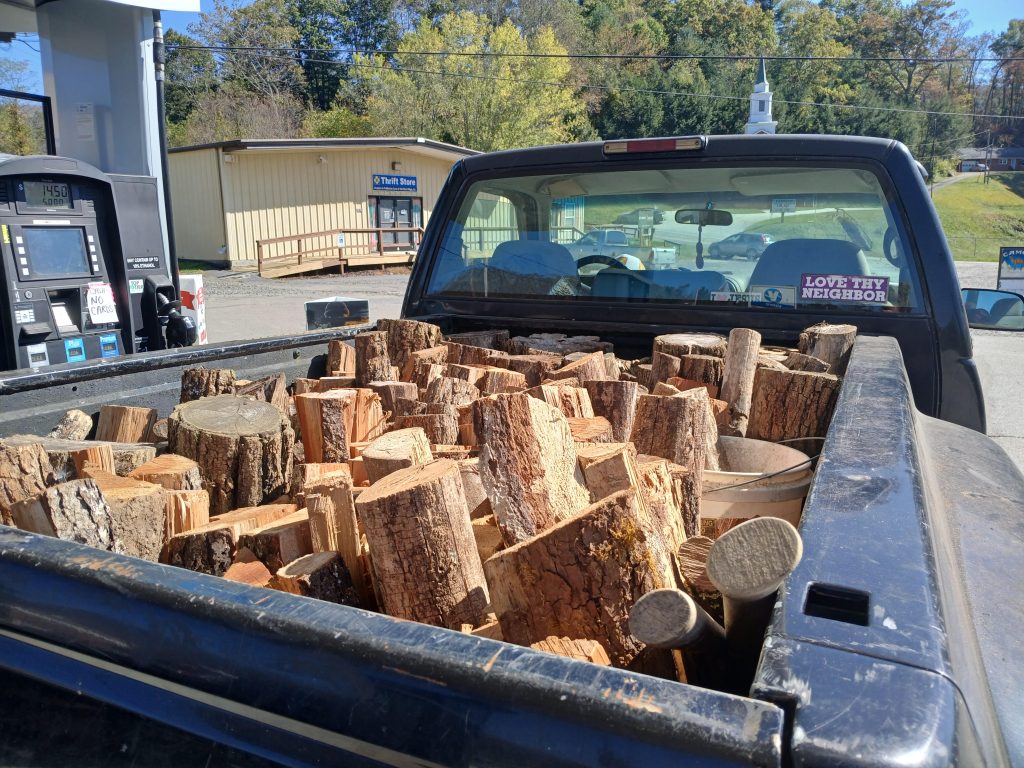
The above photo shows a load of firewood split and delivered by CCA volunteers. The wood was delivered, along with sleeping bags, to a community member without a heat source due to the storm.
]]>- We need self-care and emotional support. It makes sense to be overwhelmed, afraid, or enraged right now. It makes sense to be exhausted, and yet, unable to sleep. It makes sense to be heartbroken and unable to cry. In the wake of this collective trauma, please utilize this resource for FREE counseling services. We cannot take care of others without caring for ourselves. Remember to be gentle with yourself during this time. You can also call this number for 24/7 mental health support 18009855990 or text TalkWithUs to 66746.
- We need direct, monetary donations to those who are struggling. Giving to the GoFundMes and other crowdfunding campaigns of impacted families and small businesses makes a huge difference.
- We need monetary donations to those leading relief and recovery. Some of the organizations we’re supporting include BeLoved Asheville, Helene Rebuild Collaborative, Buladean Community Center & Food Pantry, Keeping AMY Warm, Feeding Avery Families, Mitchell County Development Foundation, Swannanoa Valley Christian Ministry, and TRACTOR Food & Farms. Donations to MountainTrue are also deeply appreciated. Our flood relief work has included wellness checks, mutual aid resource sharing, emergency fund distribution, clean-ups, soil testing, well testing, and more.
- We need volunteers. We need volunteers to meet a variety of ever-changing needs. Some current volunteer needs include: 1) showing up in impacted communities to help when and where you are needed, and 2) driving donations from congregations and warehouses to their destinations. To sign up to be a volunteer with us, please fill out this form.
- We need respite and housing. If you have a vacation home, extra bedroom, Airbnb, etc. now is the time to open your doors for those in need. Families and individuals need a place to stay until they can get moved into FEMA housing or confirm that their home is safe. People also need a place to decompress. Local and out-of-region housing is needed. If you are interested in providing short or long-term housing for someone, please fill out this form.
- We need transportation. There are lots of folks currently without transportation because their vehicle(s) were irreparably damaged by the storm. If you might be able to connect someone with reliable transportation, please fill out this form.
- We need childcare. We need friends, churches, and community centers to open their homes/buildings to help fill the childcare gap created by indefinite school closures. Even 2 hours of care a day makes a difference.
- We need help navigating FEMA. If you’re someone who likes (or just doesn’t mind) paperwork, you could really help someone as they navigate creating their FEMA account. Sometimes just sitting with someone as they take on a task like this is enough. Right now, folks are overwhelmed, exhausted, and grieved. Support doing the tedious things that have to happen is a beautiful way to lend a hand.
- We need long-term partners. The rush by so many to help is heartwarming. People are also worried they will be forgotten in a month. If you want to chainsaw some trees, know that there will still be a need for that in a month. Please think about how you can help communities through the ebb and flow of attention that we know is coming. It is estimated that some areas of WNC will not receive power for months.
- We need missional buy-in. We need folks to support Sarah’s time in organizing (as well as the time of our colleagues at MountainTrue) by donating to MountainTrue‘s Helene relief. These donations make sure we can keep pivoting and showing up where we’re most needed as an organization. Please put “CCA Helene Relief” in the memo to designate your donation for our program.
- Lastly, we need information. We need you to share what your congregation is doing to support relief efforts and/or what your congregation needs following the storm and its impact. We know faith communities are doing so much to ensure people are safe, fed, and loved in the wake of this climate emergency. CCA will help support that work by connecting congregations with relief and making sure impacted communities know what is available. Please fill out this quick survey to help us learn about the role you’re playing and/or what you need.
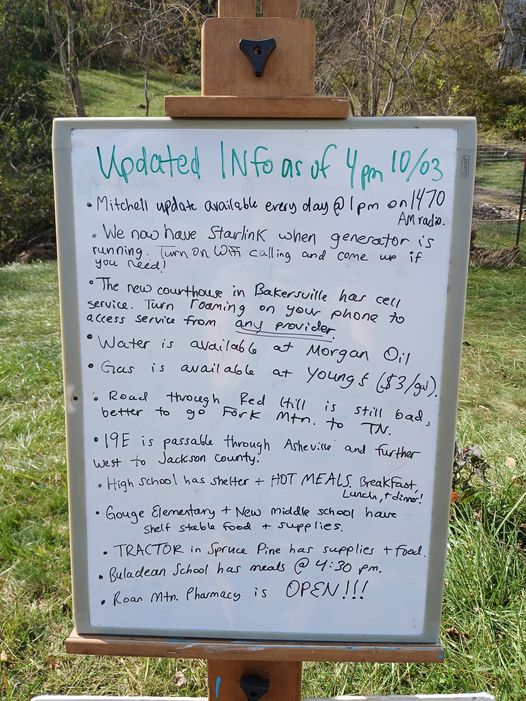
**Note: Because our director lives in rural Mitchell County, we have a unique opportunity to help fill gaps in this area. That said, resources gathered through our network will go wherever they are most needed and are not limited to Mitchell County, NC.
]]>Call on Ingles to protect God’s Creation!
Ingles Markets is our hometown grocery store chain. They are also one of the largest sources of plastic pollution in Western North Carolina due to their unwillingness to stop offering single-use plastic bags at the checkout counter.
Ingles Markets is the largest grocery store chain in Western North Carolina, and its headquarters are located in Black Mountain in Buncombe County — where residents use an estimated 132 million plastic shopping bags every year. Fewer than 1 in 10 plastic bags are recycled, according to the EPA. That means, each year, tens of millions of Ingles single-use plastic shopping bags are either being incinerated, clogging up our landfills, or as litter along our highways or in local rivers, streams, and forests.
Grocery stores, like Ingles, continue to use single-use plastic bags because they are cheaper for them. Unfortunately, they are not cheaper for us.
The average lifespan of a single-use plastic bag is only 12 minutes. But they last for thousands of years in our environment, breaking down into smaller and smaller pieces called micro or nanoplastics. These tiny plastic particles end up in the air we breathe, the water we drink, and the food we eat. It’s estimated that we all ingest a credit card’s worth of plastic each week. Studies have confirmed the presence of plastics in various human tissues and bodily fluids, including blood, brain, lungs, colon, liver, placenta, breast milk, and carotid arteries, and a growing body of science shows that these plastics and the additives used to make them can be harmful or toxic to both wildlife and people.
The impact of plastics on human health is becoming increasingly clear. Microplastics can penetrate cellular structures, disrupting energy production and promoting inflammation. They also interfere with hormonal functions, impacting brain communication, immune responses, and organ function. The consequences are severe, linking plastic pollution to a range of health issues, including infertility, premature births, various cancers, and even neurodegenerative diseases. Research has shown that plastics in arterial plaques could increase the risk of severe cardiovascular events by up to 4.5 times within a three-year period. We’re still learning about the effects of plastics on the human body, but diseases related to plastic exposure already cost approximately 1% of the US GDP annually.
Plastics also are a significant contributor to climate change. In 2019, the production and incineration of plastic added the equivalent of 189 five-hundred-megawatt coal power plants worth of emissions into the atmosphere. By 2050, emissions are expected to increase to 615 coal power plants. Single-use plastics like shopping bags and styrofoam takeout containers account for more than 40% of all plastic production.
Ingles is chasing short-term profits and leaving us with the consequences: more medical bills, worsening health, and a warmer planet.
]]>Over these past few weeks, we’ve learned that creation care is an integral part of our faith tradition. We’ve discussed God’s care for the animals and the land. We’ve learned that we are made from soil and that one of our primary God-given tasks is that of taking care of our home—this planet, this garden, that sustains us and all life. We’ve learned that God calls this world “good” and that God’s good creation is threatened by our unsustainable use of resources like oil and gas. We have been told that the creation is groaning as it awaits our awakening, our realization that this Earth is deserving of our love and care, the same love and care offered to it by God.
Over these past few weeks, we have been reminded that God’s love is bigger than what we could ever imagine. That, as the theologian Elizabeth Johnson would say, “God’s love is broad enough for the bears” and all manner of creeping things that make these lands and waters shimmer with life. God’s love is big enough for all of it and all of us. Because we too are members of creation.
Though we like to pretend that we exist outside of the environment, we occupy a place in the ecosystem in the same way that butterflies and herons do. We too are creatures. Our survival, our health, our present and our future is predicated upon the health of the whole. We do not exist in a vacuum. Instead, we exist as a part of a system beautifully crafted by God. We eat the fruits of the land, drink the waters of the rivers, and breathe air first inhaled as carbon dioxide by the trees… All this is to say that creation care is not separate from the care of people. Creation care is the care of people. Because creation care is the care of all that has been created. And that means us too.
When asked how I came to work at the intersection of faith and environment, the shortest answer is that I love people. I love people and I know that people of faith can and have done transformative things when we work together, embodying the radical love of Jesus… The longer answer to that question is that when I was a student at Appalachian State, I took a class that changed my life. Taught by Dr. Jen Westerman, “Introduction to Sustainable Development” fulfilled a Gen-Ed requirement I still needed as a first-year transfer student. And though I was interested in the topic, I never could have imagined how impactful that class would be on my career, and ultimately, my calling.
In Jen’s class, I learned that the climate crisis was not something that would plague the far-off future but something impacting people today. Not only were people being affected, but it was the poorest and most marginalized bearing the brunt of these changes. I learned about Indigenous communities in the far north forced from their ancestral lands because the ground, the permafrost, was literally melting beneath their feet. I learned about predominantly Black communities in Louisiana meeting the same fate—but instead of melting ice, the bayous that had seen their ancestors freed from slavery were flooding; their homes and hard-fought land disappearing under salt water. I learned about King Coal and Mountaintop Removal Coal Mining. It’s just what it sounds like. And I learned how, in addition to poisoning waterways and creating cancer corridors in some of the poorest regions of our nation, Mountaintop Removal claimed the life of 4-year-old Jeremy Davidson when a 1,000-pound boulder toppled from a mining site above his home and crashed into his bedroom.
It was these human stories, the stories of Jeremy and those like him, that shook me to my core. Because I was raised with a faith that proclaimed love for my neighbor and the “least of these.” And I couldn’t ignore the fact that it was this very group suffering the most at the hands of environmental destruction–which brings us to this morning’s passage.
Today’s scripture is one many of us know well. It imagines the time of judgment when Jesus will look to us, the departed, and separate the sheep from the goats—those who have followed his commandments from those who have not. What’s interesting about this passage is what qualifies you as a “sheep” or a close follower of Christ and his law. Much to the dismay of churchgoers and clergy alike, it isn’t church attendance. It isn’t public prayer or large revivals. It certainly isn’t how we dress or our 401k profile. No, Jesus defines his followers as those who have served “the least.” And he doesn’t leave that up for interpretation.
He says, “Come you that are blessed by my Father, inherit the kingdom prepared for you from the foundation of the world; for I was hungry and you gave me food, I was thirsty and you gave me something to drink, I was naked and you gave me clothing, I was a stranger and you welcomed me, sick and you cared for me, I was in prison and you visited me…” And when the righteous question Jesus, saying, “We never saw you. When did we do this for you?” Jesus responds, “Truly I tell you, whatever you did for the least of these, you did for me.” Not only does Jesus lay out the actions that honor him, he goes a step further by saying that in caring for those who were hungry, thirsty, sick, naked, in prison, and alienated from their home, we care for him. Jesus among us.
Like those in Jesus’ time, we might be surprised by this statement. After all, the crowds in Jerusalem were not expecting the messiah to arrive on a donkey. But Jesus has always been subversive. Born in the town of Nazareth, a town equivalent to today’s slums, Jesus was unexpected. And so, it should not surprise us that those Jesus embodies are those with the least political sway and resources. When we feed the hungry, we feed Jesus. When we give water to the thirsty, we do so unto Christ. This is how we live our Christian vocation, and friends, it requires creation care. Because the very same people that Jesus claims as his own, that he identifies as in this passage, are being ecologically crucified.
In his book, Where is God? Earthquake, Terrorism, Barbarity, & Hope, theologian Jon Sobrino asserts that Jesus is crucified each and every day through the lives of the oppressed, the “least of these,” whom he calls “the crucified people.” Moreover, he connects ecological harm with this crucifixion, noting the ways that even natural disasters like earthquakes are anything but natural in their destruction. Of course, seismic shifts lead to loss. But when no funds have been invested in infrastructure, when people are living in destitute poverty, when there is already a lack of clean water and nourishing food, even a minor earthquake becomes catastrophic. In other words, power dynamics impact how crises manifest. In our current system of sin, the people with the most power fare the best in emergencies while Jesus suffers in the trenches.
Matthew 25: 31-40 tells us that feeding, clothing, and welcoming are the ways of Christ and therefore the ways of our faith. Friends, all of these activities are made more difficult by the poisoning of our environment. It is difficult to feed people when crops are withering because of unending, unprecedented drought, brought on by climate change. It is difficult to find water for the thirsty when the rivers and groundwater are poisoned with lead and other toxins like in Flint, Michigan. It is difficult to care for the sick as our world becomes increasingly toxic. Did you know that there is plastic in breast milk now? That micro and nano-plastics are in our water, food, and soil? Caring for God’s creation is caring for the animals, plants, and places. But it is also caring for each other, protecting our health, and ensuring that our children and neighbors have what they need to live a life of beauty and hope. It is our job to respond to Jesus in our lives, and that means leaving no one and nothing out. All God’s creatures. All God’s children. All God’s creation.
So how do we do it? First, we continue the good work we are already doing. We keep filling the blessing box. We keep helping neighboring cities and towns recover when disaster strikes. We keep showing up for each other with genuine care and concern about the well-being of our hearts and homes. And then, like Jesus, we go a step further.
We take stock of the land where we live, play, and pray and consider how we might bring those spaces back to life—how we might breathe into them as God breathes into us. We challenge rhetoric that claims environmental issues are partisan issues and not moral and spiritual responsibilities. We pick an issue, an area of focus, it could be water quality or plastic reduction, agriculture or climate change, wildlife conservation or environmental education for children—wherever we feel most called. And we dig in there. In the words of Frederick Buechner, “find the place where your deep gladness and the world’s deep hunger meet.” It doesn’t particularly matter what you choose because it is all connected. You don’t need to force yourself to care about something you don’t care about. You only need to realize how everyone and everything that you love relies on this planet, this place, this garden, given to us for safekeeping by God.
You don’t have to do this work alone and I hope you won’t try to. This work demands community and support. And I would love to support you. The Creation Care Alliance would love to support you. Countless other faith leaders and organizations would love to support you… would love to join you and work alongside you. Because make no mistake, you are needed in this moment. As fires rage across California, as heat stroke threatens the lives of farmers and children alike, we are called to take the crucified down from their crosses. May it be so.
]]>This morning we continue our series on Creation Care, turning back to the story of God’s creation as it unfolds in the opening chapters of Genesis. Last Sunday in Romans chapter 8 we learned how all of creation is groaning for God’s redeeming work to come to completion, a reminder that God’s love is not just for us humans but its love for the entire created order – the birds and the insects, the animals and fish and plants, the earth and the sky – God’s love is for all! Back on the first Sunday of June we read from the first chapter of Genesis, beautiful verses that describe God’s orderly acts of creation. God speaks, the world is born, and time and time again God affirms the goodness of it all. But soon the plot takes a turn away from goodness – the first humans choose to disobey God in the garden of Eden, they are driven out of paradise and soon murder, wickedness and violence among the humans push God to the brink. By the time we get to Genesis chapter 6 God is so grieved over the evil tendencies of humans, that He regrets making humans in the first place. This sad, downward spiral happens over the course of just a few chapters! But remarkably God finds favor in one family, the family of Noah – and the decision is made to save humanity and two of every living thing through the construction of a giant boat called the Ark. While the Flood will wipe away many, God makes a covenant, a promise with Noah, his family and every living thing -a covenant promise of blessing and new life (Genesis 6.9-22). It’s like Creation 2.0!
This morning we pick up the story in chapter 9 to hear more about God’s promise, God’s covenant with all the earth’s creatures. Join me in reading the parts in bold in your bulletin.
Genesis 9:1-4, 8-16 Common English Bible
God blessed Noah and his sons and said to them, “Be fertile, multiply, and fill the earth. All of the animals on the earth will fear you and dread you—all the birds in the skies, everything crawling on the ground, and all of the sea’s fish. They are in your power. Everything that lives and moves will be your food. Just as I gave you the green grasses, I now give you everything. However, you must not eat meat with its life, its blood, in it.”
“I am now setting up my covenant with you, with your descendants, and with every living being with you—with the birds, with the large animals, and with all the animals of the earth, leaving the ark with you. I will set up my covenant with you so that never again will all life be cut off by floodwaters. There will never again be a flood to destroy the earth.”
God said, “This is the symbol of the covenant that I am drawing up between me and you and every living thing with you, on behalf of every future generation. I have placed my bow in the clouds; it will be the symbol of the covenant between me and the earth. When I bring clouds over the earth and the bow appears in the clouds, I will remember the covenant between me and you and every living being among all the creatures. Floodwaters will never again destroy all creatures. The bow will be in the clouds, and upon seeing it I will remember the enduring covenant between God and every living being of all the earth’s creatures.”
The Word of the Lord. Thanks be to God.
When our first child Nicholas was born, we placed a metal piece of artwork of Noah and the Ark over his door frame. I remember the animals all in a line heading inside the Ark. An exciting story with animals and a boat, water and a rainbow – what’s not to love? And you can understand why this theme has been so frequently used to decorate children’s rooms.
However, a closer look at this story reveals that this is no tale just for children. Growing up in the early 70s, I remember the classic children’s Bible story book found in doctor’s waiting rooms that depicted people pounding on the door of the Ark, looking for safety before drowning in the water. While this epic tale with rain for 40 days & the Ark floating above the mountain tops has captured our imaginations, we can not ignore its violence. The wickedness of humans led God to the decision that something must be done, and the story of the flood and God starting over with a new family is an important part of the unfolding of salvation history. But in terms of our focus on creation care, I want to lift up the fact again that the covenant God makes after the flood is for all of creation, not just humans. God says, “I am now setting up my covenant with you, with your descendants, and with every living being with you—with the birds, with the large animals, and with all the animals of the earth” that are on the ark with you (9.9-10). This covenant is a divine promise. God is saying to all of creation, “Even though humans keep choosing to put themselves first and live in destructive ways, I promise I will never do this again! I will never again destroy every living creature – because I am God of all of creation, I promise that seedtime and harvest, summer and winter, day and night – these shall never cease” (Genesis 8.21-22).

Though the Bible is a long book filled with many things we might not understand, and there are violent stories like the one about the flood that might not make sense to us, I want to make sure we don’t miss the big point – and that is God’s Love. In Genesis chapter 6 there is a remarkable verse that takes us inside the heart of God – yes, a God who is the Mighty Creator of the Universe but also a vulnerable God who has a broken heart We are told that when the Lord saw the wickedness of humans, God was sorry that he had made humans on the earth, and “it grieved him to his heart” (Genesis 6.5-6). The Common English Bible says God was heartbroken. And so what does God decide to do? While it may be tempting to start over from scratch, out of love for the whole world God simply can’t go there. God’s love is too big, and so the plan to save the world is hatched. But when the flood is over, and Noah’s family gets off the ark, it quickly becomes apparent that humans still are prone to do evil (Genesis 8.21). Nevertheless, God chooses to make the promise to never destroy creation again. Commenting on how remarkable this decision is, Bible scholar Terrence Fretheim says this: “This kind of divine response means that God has chosen to take the route of suffering relative to sin and evil… For God to decide to endure a wicked world, while continuing to open up the divine heart to that world, means that God’s grief is ongoing… [Indeed, God decides] to take suffering into God’s own heart and bear it there for the sake of the future of the world”(Working Preacher; March 1, 2009). And this is the same kind of love we see on the cross of Jesus Christ – the love of a God who is committed to our relationship, no matter the cost.
Because God loves us and all of creation, including all the animals who marched onto the ark two by two, including the magical and ancient blue ridge mountains we see everyday when we walk outside – because of God’s great and suffering love for everything we are called to love back – we are called to love the creation God has made not as a duty or responsibility but as act of free love. In the podcast “Learning How to See” (“Seeing Nature as a Lover” Part 1, with Scott Smith) pastor and writer Brian McLaren talks about the importance of contemplation, the act of learning how to see the world around us. In a world that’s always trying to distract us, it’s important that we pay attention to what we love and value, for whatever it is we love we will be willing to take action to protect. Whatever we love, we will try to save. Whatever we love can motivate us to action.
Honestly, it’s easy to despair about the state of our natural world – the consequences of global warming that we learn about each day on the news – the way that human greed and consumption continues to threaten death to the planet entrusted to our care. I recently saw a depressing cartoon of Noah talking with God who is up in a cloud. God says, “Noah, with climate change there will now be two seasons: drought and flooding. You should begin building an ark for the next flood.” Holding a hammer in his hand, Noah responds to God, “But the drought killed all the trees.” And in the bottom corner of the cartoon in small letters a man says, “And the animals, too.”
When it comes to dealing with the environmental crisis, I think some of us may stay in the house of denial or indifference, and others may live in the one called despair, but I think all of these groups are missing the point. Just as God so loved the world, the entire creation and cosmos, we too are to act and live in love. Though as a good Presbyterian trained pastor I value the power of words and careful interpretation of scripture, I think when it comes to helping us respond from our hearts we miss out. When it comes to responding to the climate crisis, we need to rely less on analysis and more on imagination. We need to tap more into love and less into fear.
This morning we will close with a story that might help us make this move into imagination and love. It’s a modern day parable intended to help us imagine what would happen if Jesus visited a zoo full of animals who were stuck in their cages. I’ve asked Melinda to share it with us, and after she reads there will be a time for us to reflect and share some together.
“Jesus Visits the Zoo” by Elizabeth Bettenhausen (Earth & Word: Classic Sermons On Saving the Planet edited by David Rhoads)
“Very early one morning, when the summer sun was just coming up, Jesus got out of bed and walked to the zoo. The animals were waking up, too. The peacocks were fluffing their blue and green and purple feathers. ‘Hi, peacocks!’ said Jesus. ‘How are you?’
‘Hi, Jesus!’ said the peacocks. ‘We’re fine.’ Their beautiful tails opened wide.
Jesus smiled a wide smile and said, ‘Let’s walk together.’
So they walked and talked, and soon they came to beautiful rolling stripes of black and white lying on the grass. ‘Who is looking so good?’ called the peacocks.
The zebras opened their eyes and laughed. ‘We heard you coming, peacocks. Hi, Jesus!’
Jesus said, ‘Hi, zebras! How are you this morning?’
‘Frisky!’ said the zebras. ‘May we come along?’
‘Sure!’ replied Jesus and the peacocks. The zebras started a flowing, bouncing black and white dance right ahead of them.
‘We can do that,’ said the peacocks. They joined the zebra dance. Jesus did, too.
“Soon they came to the huge rocks where the lions lived. ‘0 lions, would you dance with us?’ called the zebras.
‘Great invitation!’ roared the lions. ‘Hi, Jesus!’
Jesus said, ‘Hi, lions! How are you this morning?’
‘Flexible and full,’ said the lions. They strode to join the zebras and peacocks and Jesus in the flowing, bouncing dance.
The boa constrictor heard them, yawned, and crawled out onto a big tree branch to watch them dance along. ‘Hi, big boa!’ roared the lions. ‘Would you like to ride along in our dance?’
‘An expansive idea,’ said the boa. ‘Hi, Jesus!’
Jesus said, ‘Hi, boa! How are you this morning?’
‘Fluid,’ said the boa and smiled happily as it crawled down the tree and up on the lion’s back. The boa and the lions and the zebras and the peacocks and Jesus danced along in a flowing, bouncing dance.
Soon they came to the gorillas’ trees and rocks. ‘Uh oh,’ said the boa, looking from high on the lion’s head. The gorillas were talking together in a very serious way.
Jesus called to them. ‘Hi, gorillas! How are you this morning?’
The gorillas looked up. ‘Hi, Jesus. We are fervent this morning!’ [fervent means showing great warmth or enthusiasm, passion]
‘Hmm,’ said Jesus slowly. ‘Do fervent gorillas dance?’
‘Of course gorillas dance, Jesus,’ said the gorillas, ‘but not this morning.’
‘Why not?’ asked the boa.
‘The dancing is flowing, bouncing pleasure,’ called the lions.
‘We are glad you are enjoying it,’ said the gorillas. ‘But we are not in the mood.’
‘Did you have a bad night’s sleep?’ asked the zebras.
‘Was it full of crickets’ loud clicking?’ asked the peacocks.
‘No,’ said the gorillas. ‘We had a deep sleep and are full of energy this morning. That is why we are talking today.’
‘Talking about what?’ the peacocks cried, getting a bit impatient.
‘Leaving!’ called the gorillas, and they pounded their fists on their chests.
‘Leaving your cage?’ the boa asked.
‘Leaving the whole zoo!’ said the gorillas, very, very seriously. ‘That is what we have always planned to do. And today is the day.’
‘That’s like flying over the farthest, highest fence,’ a peacock whispered dreamily.
The zebras and lions started stretching their leg muscles. Jesus looked into the eyes of all the animals. Then he said, ‘Behind some bushes and trees the metal fence has a large hole.’
‘Let’s go!’ cried the gorillas.
‘Yes!’ the dancers all said, except for one peacock.
‘What about the children?’ the peacock asked. ‘They will come to visit, and we won’t be here.’ Everyone grew still and thoughtful.
Then Jesus said, ‘I will write a note in the smooth sand at the playground.’ And he did. When the animals read the note they smiled and followed Jesus. They danced a flowing, bouncing, joyful dance to the hole in the fence and out of the zoo.”
When the zoo opened that day, some children ran to the playground first. They saw the note Jesus had written in the smooth sand. What do you think happened then?
]]>I’m a new mom. Not that new. My daughter Margot is 15 months old as of today. But despite how much I’ve learned over this past year and some change, I still feel pretty new. I know how to change a diaper, Margot has learned how to drink from a sippy cup, and we’ve transitioned away from bottles. But every time we figure something out, something changes.
We used to rock her to sleep. That doesn’t work anymore. Now she knows what the rocking chair does and she arches her back to avoid it at all costs. Baby dolls used to be her favorite toy, but now she is all about balls. So many balls. Every color and size… They are all over our house. We used to trust that she was safe in her “yes space,” the part of our living room that has been thoroughly baby-proofed complete with gates and outlet covers. But we can’t assume that anymore because now she can climb. Her favorite place to stand is on top of her dump truck, despite, or maybe because of, the fact that it rolls.
More than any other life experience, parenting has made the constant presence of change clear to me. Despite all my efforts to plan for the next thing, the next stage, Margot throws me for a loop. I am in a constant state of learning and striving to adjust. Change is the only constant. And I am thoroughly exhausted.
A particular challenge that I have found in this stage of parenting a young human is that everything is happening all at once. I’m no longer in that newborn bubble. So now, in addition to being Mom to my girl, managing teething, sleep patterns, and daycare schedules, I’m also working. I’m attending Zoom calls and coffee meetings and planning events. I’m a pet parent who needs to take the dogs to the vet. I’m a consumer with a running list of agencies to call about bills, student loans, and cell phone plans. I’m a spouse trying to find time to do the dishes and have meaningful conversations and date nights. I’m a concerned citizen worried about the state of our democracy, our climate, and all those who find themselves in war zones, victims of violence and state-sanctioned bombs.
The days are a constant stream of to-dos muddled by worries. It’s hard. And my hunch is that you can relate. A lot is happening in our lives. If it’s not toddlers, it’s aging parents or friends. If it’s not work, it’s illness or a raise in the rent. So much, so often. It’s hard to juggle. It’s hard to process. And it’s hard to be present. All of this has had me thinking a lot about Sabbath.
What does it mean to keep the Sabbath? And how do we do it? Is Sabbath merely rest or something more? And how do we rest when so much is happening? When so much demands our attention–in our own families and in the world?
Like many of us navigating our culture of capitalistic idolatry, where productivity is the golden calf held up above all other gods, the idea of rest for rest’s sake is challenging to me. I know that rest is not only necessary but a part of our divine inheritance. I know that we deserve rest regardless of whether or not we have “worked hard enough.” But friends, I struggle to practice this. I struggle to sit in stillness. I struggle to clear my mind. I struggle to simply be. And I think that that is why today’s passage is so intriguing to me.
In our scripture this morning, Jesus offers us a balanced take. A look at Sabbath that isn’t black and white, but gray. And in my experience, the gray area is one of God’s favorite places to dwell. So, what does practicing Sabbath look like when everything is happening all at once? Let’s go to the text.
Our scripture today recounts two instances where Jesus is questioned regarding the laws of the Sabbath. In the first story, Jesus is confronted by the Pharisees and questioned as to why his disciples are picking grain–an action that some, but not all, Jewish leaders at the time would have considered a violation of the commandment to refrain from labor on the Sabbath. In the second passage, Jesus reprimands the Pharisees who conspire against him after he heals a man who has a withered hand on the Sabbath–an injury that may seem insignificant today, but at the time, was likely a life or death issue as it would have prohibited many kinds of physical labor.
Before saying anything else, I want to note that these kinds of passages have been used historically in ways that are antisemitic. They’ve pinned Jesus against Judaism, seeking to elevate Christianity by denouncing the Pharisees as overly rigid or ritualistic. But neither Jesus nor his disciples are Christians. They are Jewish. These confrontations are happening within the same religious context. This isn’t about Christianity versus Judaism. This is an inner-communal conversation between Jesus and religious authority figures regarding what constitutes Sabbath observance, and more broadly, how we sometimes let doctrine get in the way of our love.
The crux of the argument is this–while the Pharisees assert that harvesting grain and healing should not happen on the Sabbath because it constitutes labor, Jesus maintains that the “principle of doing good is what should govern the Sabbath.” Instead of a strict adherence to doctrine, Jesus asks the Pharisees to honor the intention and context of the labor they are criticizing. The disciples are likely harvesting grain instead of eating what was prepared the day before because they are on their way to preach with Jesus. And being present with the masses, teaching them about God’s love, that is a good thing. These implications continue in the next story of Jesus’ healing the man with the withered hand when Jesus asks the crowd, “Is it lawful to do good or to do harm on the sabbath, to save life or to kill?” Here, Jesus takes us to the heart of sabbath observance, to why we do what we do–reminding us and the Pharisees not to become so preoccupied with the rules that we forget their purpose. We don’t observe the sabbath just to say that we did. We observe the sabbath to be reminded of whose we are, why we are, and what that means.
So, back to our original question. How do we keep the sabbath when everything is happening all at once? According to Jesus, Sabbath observance doesn’t require that we tune out the needs of our family or the world. It doesn’t require stillness or that we master the art of meditation. Instead, Sabbath observance is governed by the principle of doing good, and I would add, the spaciousness to respond to the moment we find ourselves in.
In truth, spaciousness is what I see most in these passages. The disciples have the space in their day to respond to the needs of their bodies. Can you imagine if we had room to do that? Jesus has the space in his day to respond to the needs of the man in front of him who needs healing. Can you imagine if we had room to do that? To respond to the needs of our human and more than human neighbors? The couple whose car has broken down or the box turtle who needs help crossing the road? What if we had the room in our day to take the plastic we noticed weeks ago out of the creek? To fix the birdhouse? To call our senators and remind them of their obligations to create a more just and loving world? Jesus and his disciples had the space, the time, to respond to the moment before them with intention and presence. They made that time. They created that space. And we can as well.
Of course, Sabbath doesn’t give us more hours in the day. We have to step outside the chaos of commerce and productivity worship and walk into the world with our eyes wide open. We have to look up from our phones. And yes, we have to rest. We have to rest in ways that fill our spirits and keep us open-hearted. We have to stop over-planning and start trusting that the day will come to us if we throw out our arms and accept what comes through God’s abundant love.
You may wonder why someone called to the intersection of faith and environment just preached about Sabbath. It’s true, sometimes my sermons are more pointedly ecological. But make no mistake. Sabbath is essential to the achievement of creation care and climate justice. We cannot respond to the needs of a world aching for our presence if we cannot be present to our own needs–our own tired bones and the needs of our loved ones. We have to practice presence, and we have to understand our interconnectedness. We too are a part of creation. Our burn-out and exhaustion will benefit no one and nothing. Without Sabbath, we will not only tire of the good work we are called to do, but we will have no energy to be who we are called to be in all our many roles.
Sabbath may not happen on Sunday for you. It might happen in hourly increments. Or maybe on Thursdays. It might happen through time spent on your porch. It might show up in the form of belly laughter while catching up with old friends. It may happen as you cook the kind of dinner that includes chopping, and stirring, and simmering. It might be prayer, or a nap, or mediation. It might be dancing. The important thing to remember is that Sabbath is not a stepping out, but a stepping in. And thank goodness. Because this broken and bleeding world needs you in your fullness, entirely awake.
Professor of theology and ecology, Norman Wirzba, says that Sabbath “is fundamentally about saying yes to the gift of this life, the gift of community, the gift of our friends, the gift of our places.” And friends, I want that for all of us. Instead of waking to the “shoulds” of our to-do list, I want us to wake with “yes” on our lips… Imagine if Sabbath was defined by the principle of God’s goodness–for our neighbor, for ourselves, and all of creation. Imagine what that would look like. What would it take to make that happen? May it be so.
]]>
On this first Sunday of June we begin a series on creation care, the call we have as Christians to be good stewards of God’s good gift of creation. For the next several weeks we will be turning to various passages from the Old Testament, seeking wisdom from the Hebrew scriptures that tell us a lot about who God is and about who we are called to be. As we have learned from our recent study of the Book of James, what we say we believe about God must be matched by our actions, how we actually live our lives. So I am hoping our study will give us good scripture and theology about creation care, as well as giving us some handles on how we can put our faith in action. We are blessed to have Sarah Ogletree as a member of our church family. She is the director of the Creation Care Alliance, a non-profit that helps faith communities be good stewards of God’s world. Sarah is available as a resource for us and will preach the closing sermon in our series on July 7.
When it comes to understanding creation care, the best place to start is at the beginning of the Bible, the first page to be exact! So let us turn now to the opening chapter of the Bible, reading together the verses we find in the insert this morning.
Genesis 1- 2:4, selected verses New Revised Standard Version Updated Edition
In the beginning God created the heavens and the earth, the earth was complete chaos, and darkness covered the face of the deep, while a wind from God swept over the face of the waters. Then God said, “Let there be light,” and there was light. And God saw that the light was good, and God separated the light from the darkness. God called the light Day, and the darkness he called Night. And there was evening and there was morning, the first day.
And God said, “Let there be a dome in the midst of the waters, and let it separate the waters from the waters.” So God made the dome and separated the waters that were under the dome from the waters that were above the dome. And it was so. God called the dome Sky. And there was evening and there was morning, the second day.
And God said, “Let the waters under the sky be gathered together into one place, and let the dry land appear.” And it was so. God called the dry land Earth, and the waters that were gathered together he called Seas. And God saw that it was good. Then God said, “Let the earth put forth vegetation: plants yielding seed and fruit trees of every kind on earth that bear fruit with the seed in it.” And it was so…. And God saw that it was good. And there was evening and there was morning, the third day.
And God said, “Let there be lights in the dome of the sky to separate the day from the night, and let them be for signs and for seasons and for days and years, and let them be lights in the dome of the sky to give light upon the earth.” And it was so…. And God saw that it was good. And there was evening and there was morning, the fourth day.
And God said, “Let the waters bring forth swarms of living creatures, and let birds fly above the earth across the dome of the sky.” So God created the great sea monsters and every living creature that moves, of every kind, with which the waters swarm and every winged bird of every kind. And God saw that it was good. God blessed them, saying, “Be fruitful and multiply and fill the waters in the seas, and let birds multiply on the earth.” And there was evening and there was morning, the fifth day.
And God said, “Let the earth bring forth living creatures of every kind: cattle and creeping things and wild animals of the earth of every kind.” And it was so…. And God saw that it was good. Then God said, “Let us make humans in our image, according to our likeness, and let them have dominion over the fish of the sea and over the birds of the air and over the cattle and over all the wild animals of the earth and over every creeping thing that creeps upon the earth.” So God created humans in his image, in the image of God he created them; male and female he created them. God blessed them, and God said to them, “Be fruitful and multiply and fill the earth and subdue it and have dominion over the fish of the sea and over the birds of the air and over every living thing that moves upon the earth.” … And it was so. God saw everything that he had made, and indeed, it was very good. And there was evening and there was morning, the sixth day.
Thus the heavens and the earth were finished and all their multitude. On the sixth day God finished the work that he had done, and he rested on the seventh day from all the work that he had done. So God blessed the seventh day and hallowed it, because on it God rested from all the work that he had done in creation.
The Word of the Lord. Thanks be to God.
Believe it or not, our house is on fire. Our home, planet Earth, is warming up each year. The scientists at NASA and NOAA, the National Oceanic and Atmospheric Agency, have been tracking the steady rise of global temperature for a long time. Recently they issued a report that “confirms what billions of people around the world experienced last year; we are facing a climate crisis… From extreme heat, to wildfires, to rising sea levels, we can see our Earth is changing. Last year was the warmest year since global records began in 1850, and the 10 warmest years have all occurred during the last decade (www.nasa.gov/news). And if you have been paying attention, this really should not come as a surprise. Even though we are nestled in the pleasant climate of the Blue Ridge mountains, we know what’s happening all around us. Heat waves, intense rainfall, and coastal flooding are causing suffering to people in our country and around the world. Those of you who have gone on mission trips with the Presbyterian Disaster Assistance program know first hand the damage floods and hurricanes can do to the land and to people’s lives. Severe droughts have caused millions of people to leave their homes, forcing people to search for safety and resources. Whether it’s the severe flooding in Sudan, the drought in the Horn of Africa, or the wildfires in California, our planet is in crisis. And the crisis is affecting all of God’s creatures, whether those living on land, in the sea or the birds of the air.
While the temptation is always there to think, “Well, if it’s not affecting me directly, then why should I care?!” we know as followers of Jesus we are called to do and be better than that. Jesus calls us to love God with all our heart, soul, and mind, and to love our neighbors as ourselves (Matthew 22.37). Loving God has everything to do with honoring, respecting and caring for God’s good creation, and loving our neighbor means we have to consider their pain, their distress, and do everything we can to be part of the solution, not the problem, when it comes to the climate crisis. Though in recent years the question of whether human activity has an impact on the climate crisis has become politicized, the science has been around for years, in fact centuries! In her 2018 TED talk, Canadian climate scientist Katherine Hayhoe points out it’s been 150 years since scientists first discovered that digging up and burning coal, gas and oil produces heat-trapping gases that wrap an extra blanket around the earth, contributing to its warming. And it’s been thirty-three years since the Presbyterian Church adopted the Brief Statement of Faith, acknowledging our sin and complicity in exploiting neighbor and nature, and “threatening death to the planet entrusted to our care.” Like our Jewish ancestors, Presbyterians have been called “People of the Book” because of our commitment to God’s Word, not as a dead document from the past but as a living, Spirit-filled guide to how we are to live our lives today. So this morning I invite us to take a closer look at the opening pages of our book, the passage from Genesis that has been so important in understanding God’s good creation and our role in it.
Though today’s passage is a bit long, reading it through together allows us to see and hear it for what it really is: it’s beautiful poetry! There’s the careful repetition of “Let there be this” and “Let there be that!” and “it was so… and there was evening and morning , the third or fourth day.” Bible scholars believe the poetic passage was read in worship, like the liturgy of a call and a response. Unfortunately, some have tried to read the passage as if it were a guide to science or evolution, and debates have arisen over whether or not each day should be counted as a literal 24 hours or symbolically some other span of time. When we try to impose our modern ideas back onto an ancient, holy & inspired text, we not only do harm but we also simply miss the point! These verses speak of a Holy Mystery in which a Creator speaks and order is brought out of the chaos. Light and dark are separated – the waters above and below are also separated and named by God. This is not a lesson in science but rather it’s a hymn of praise to the God who creates everything with intention, with care, with purpose.
In reading over these verses this week, I have been challenged to re-think some of the assumptions and beliefs that I carry, a practice I believe can be useful from time to time. For one thing, I always thought it was the humans who are blessed first and then told by God to “Be fruitful and multiply!” But actually God blesses the fish, the other sea creatures and the birds BEFORE humans are blessed and told to multiply (1.22). You see, the assumption I think we may carry is the idea that the creation account is like a ladder, all building up to the pinnacle of humans being created on the last day. But I think a careful reading of the passage says “not so fast!” Everything that is being created is not only dependent on God but also dependent on one another. Without the waters being gathered together, there would be no land. Without the land there would be no vegetation. And after each act of creation, God steps back, looks and affirms it all as good. And when we get to day 6, we see that we humans do not even have our own day, but we must share it with the other animals who are deemed good before we are even created.
But maybe you are thinking, “What about the verse about humans having dominion over all things? Doesn’t that make us more special than everything else?” Unfortunately, that verse has been the one that has been used to justify human domination over the creation. It’s based on the faulty but common assumption that since God made us last, we have the right to do whatever WE want with the rest of creation which is part of OUR dominion. But a closer look at the Hebrew verb in question indicates that the basic meaning is not to rule or have dominion over something. Instead, the word actually describes something altogether different – it describes the traveling around of a shepherd with their flock (Kohler & Baumgartner, The Hebrew and Aramaic Lexicon of the Old Testament, vol 2, p. 1190). Not dominating but guiding, taking care of, being responsible for the other as a shepherd guards the sheep. Bible scholar Ellen Davis summarizes this passage by noting that the language of Genesis 1 acknowledges the unique power of humans, yet it does so without separating humans from the other creatures” (Scripture, Culture, and Agriculture: An Agrarian Reading Of The Bible; p. 55). Yes, we have a special role but it is not to “lord over” the creation – rather, it is to care and protect it. Instead of a hierarchy with humans on the top, think of a circle where we are all connected. This mutuality is so important in thinking about our place in creation. It’s reflected in St Francis’ practice of naming creation as sister moon and brother sun. We are all part of God’s creation, and as we sing at the Animal Blessing “All God’s Critters have a Place in the Choir!”
A couple of years ago a funny thing happened to me that I will never forget. I went over to Eric and Brie’s for a visit, and while I was there I spent some time walking around the yard. After the visit I found out that Emmitt (who was inside) reported to his family that he had seen God walking around outside. Now I have been in the ministry long enough to know that the person at church who wears the black robe and speaks from the pulpit every Sunday about God, that person can be confused as being God, especially to kids. (In fact, such transference can happen with people of all ages.) Yes, I had a good laugh! And yes, this was quite humbling – but what has stuck with me is the realization that Emmett was right. Since we are all made in God’s image, we are all images of God walking around in the flesh. As humans made in the image of God we are called to re-present God to one another. When people look at our lives – hear our words, see our actions – we are giving witness the One in whose image we are made. With respect to creation care, this means we are to relate to the other members of creation (the birds and the bees, the fish and the cattle, the mountains and the valleys) – we are to relate to them with the same care and attention that God has modeled for us. Yes, God spoke things into existence, but once they were made God empowered the earth to put forth vegetation – plants are to yield their seeds, trees are to bear their fruit. The same is true for the fish and the birds – God blessed them and empowered them to multiply. I love how in these verses we get a picture of a God who chooses to share power in relationship with creation. It’s never about “Look at me and the power I have!” but it’s about “Look at us and the goodness of creation!” It’s no accident when God creates humans it is done in “our likeness.” We belong to the Triune God who is never solo but is always in community, in Holy relationship – the great three in one.
And so when it comes to our vocation as humans made in the image of God, we are to move (by God’s grace!) beyond our self-interest – we are to be about how ALL of creation can thrive. Instead of polluting the waters, destroying the habitats and engaging in other practices contributing to the extinction of so many species, our job as creatures made in the image of God is much different! We are to be part of the renewal of creation, not because it may be the “politically correct” thing to do but because we belong to the God who is the Creator of all things. The one who spoke and declared all things to be very, very good.
Thanks be to God. Amen.
]]>